Unlocking Growth: Comprehensive SEO Services for Modern Businesses

Albert Pak
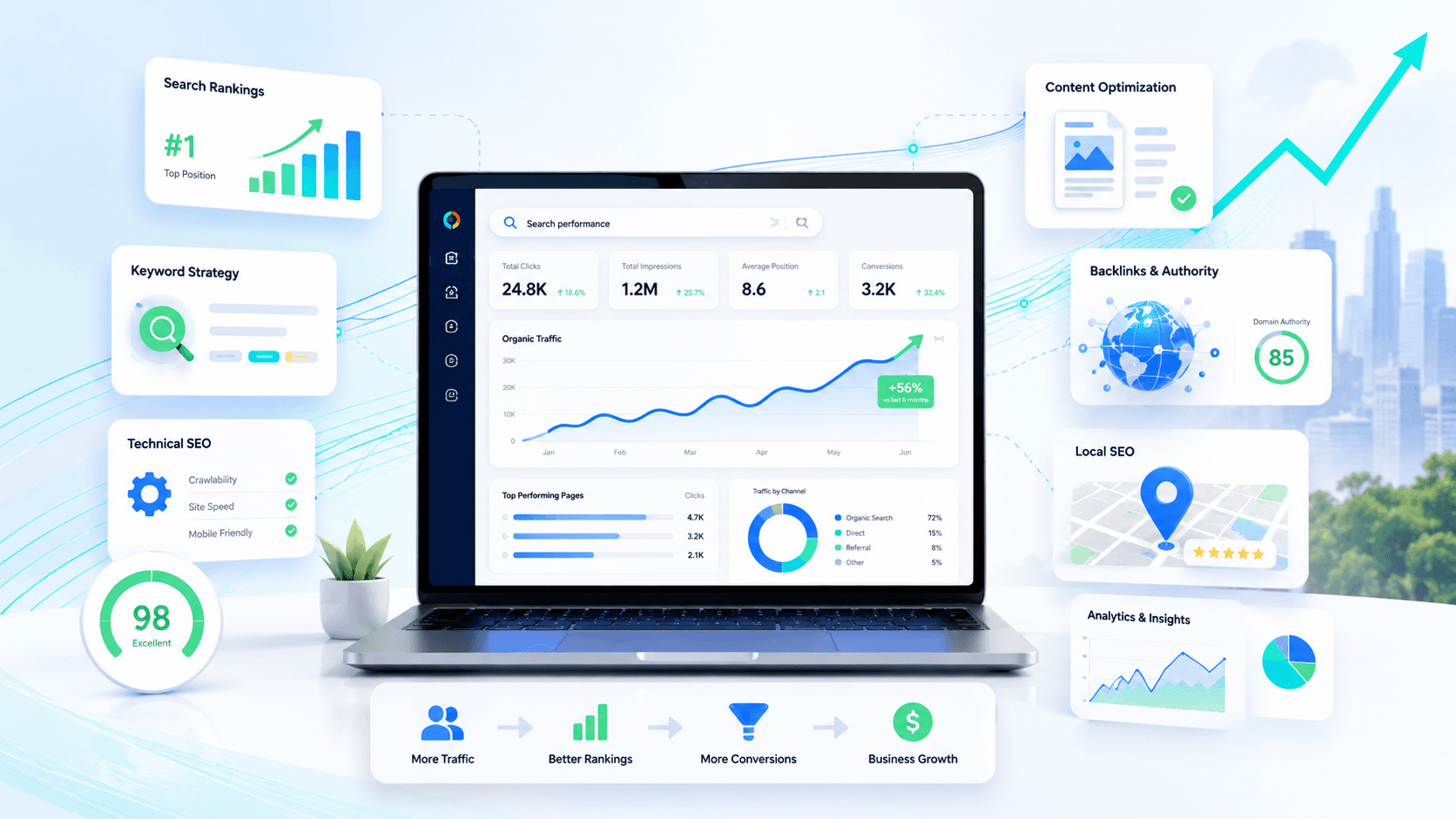
In the sprawling digital marketplace of the 21st century, visibility is synonymous with viability. If potential customers can't find you online, you might as well not exist. This is where search engine optimization (SEO) plays a critical, non-negotiable role. It's the engine that powers your visibility on platforms like Google and Bing, connecting you with an audience actively searching for your products, services, and expertise. However, SEO is no longer a simple game of keywords and backlinks; it has evolved into a deeply complex and ever-shifting discipline that requires dedicated, expert management.
For most businesses, navigating the intricate web of technical optimizations, content strategy, authority building, and algorithm updates is a full-time job in itself. Attempting to manage it in-house without specialized knowledge can lead to costly mistakes, wasted resources, and missed opportunities. This is why partnering with a professional provider of SEO services has become a foundational strategy for sustainable growth.
This article serves as a comprehensive guide for business leaders and marketing professionals. We will demystify the world of professional search engine optimization, breaking down what a holistic SEO solution truly entails. We'll explore the critical components, the process of a successful partnership, and how to measure the profound impact it can have on your bottom line. By understanding how to leverage advanced SEO services, you can secure not just higher rankings, but a lasting competitive advantage in your industry.
Key Takeaways:
- SEO is a critical, complex, and ever-evolving discipline that is essential for online visibility and business growth.
- Comprehensive SEO solutions are holistic, integrated strategies tailored to specific business goals, going far beyond simple, piecemeal tactics.
- Investing in professional SEO services drives long-term value and a high ROI by increasing brand awareness, generating quality leads, and enhancing user experience.
- Effective SEO is built on several interconnected pillars: technical SEO, on-page optimization, off-page authority building, strategic content creation, and local SEO.
- Choosing the right SEO partner involves evaluating their track record, transparency, industry knowledge, and commitment to ethical, white-hat practices.
- The success of an SEO investment is measured by a range of KPIs, including organic traffic growth, keyword rankings, conversion rates, and ultimately, the impact on revenue.
- The future of SEO is shaped by AI, voice search, and an increasing emphasis on user experience (E-E-A-T), making an expert partner essential for adaptation and success.
What Are Comprehensive SEO Solutions? A Foundational Understanding
The term "SEO solutions" often gets diluted, sometimes used to describe a single service like keyword research or a one-time audit. However, a true SEO solution is a far more robust and strategic endeavor. It represents a holistic, integrated approach to improving a website's visibility in organic search results. It's not about applying a few isolated tactics; it's about developing and executing a cohesive, long-term strategy where every component works in concert to achieve specific business outcomes, such as increased lead generation, higher e-commerce sales, or greater brand authority.
The key differentiator between generic tactics and a tailored SEO plan lies in its strategic foundation. A comprehensive solution is custom-built around your unique business goals, target audience, and competitive landscape. While a basic approach might involve sprinkling keywords onto a page, a strategic solution begins with deep market research to understand user intent, analyzes competitors to find opportunities, and aligns every action with measurable key performance indicators (KPIs). This is the difference between simply "doing SEO" and investing in a results-driven digital marketing solution.
Search engine optimization has evolved dramatically from its early days. What once centered on basic on-page optimization and link quantity has matured into a sophisticated, multi-faceted discipline. Modern SEO solutions must address the three core areas that search engines like Google evaluate: technical health, content relevance, and off-site authority. This requires a seamless integration of various professional disciplines, including web development for site speed and architecture, content marketing for creating valuable assets, data analytics for performance measurement, and digital PR for building authoritative backlinks.
A robust, full-service SEO package is built upon these core pillars. It encompasses a technical audit to ensure the website is crawlable and indexable, a content strategy to meet user needs, on-page optimization to improve relevance, and an off-page strategy to build trust and authority. By addressing each of these elements in a coordinated fashion, a comprehensive SEO solution creates a powerful, compounding effect that drives sustainable, long-term growth.
Why Your Business Needs Professional SEO Services to Thrive
In today's hyper-competitive digital markets, simply having a website is not enough. With millions of businesses vying for the top spots in search results, achieving meaningful online visibility is a significant challenge. Professional SEO services are no longer a luxury but a fundamental necessity for any business that wants to stand out, attract qualified customers, and build a sustainable future. The reality is that your competitors are likely already investing in SEO, and failing to do so means willingly ceding valuable market share to them.
While some businesses may consider an in-house approach, the limitations and potential pitfalls are substantial. SEO is a highly specialized field characterized by rapidly changing algorithms, complex technical requirements, and the need for continuous learning. For many companies, dedicating the necessary time, resources, and specialized expertise to an in-house team is simply not feasible. Without a deep understanding of the landscape, businesses risk making critical errors, pursuing outdated tactics, or falling behind algorithm updates, all of which can harm rankings and waste valuable time.
One of the most compelling reasons to invest in professional SEO is its exceptional long-term value and high return on investment (ROI). Unlike paid advertising, where visibility disappears the moment you stop paying, organic traffic from SEO is a compounding asset. A well-executed strategy builds authority and rankings over time, creating a sustainable stream of high-quality traffic that continues to deliver value long after the initial investment. In fact, studies show organic search is a dominant force, with some analyses indicating it accounts for over 53% of all website traffic.
Investing in professional SEO services delivers a cascade of business benefits. It significantly increases brand awareness and establishes credibility, as users inherently trust organic results more than paid ads. By targeting keywords that align with user intent, SEO drives higher quality leads, resulting in improved conversion rates. A core focus of modern SEO is enhancing user experience and website performance, which benefits all visitors, regardless of how they arrive. Ultimately, a successful SEO strategy provides a powerful competitive advantage, allowing you to outrank rivals and become the go-to authority in your industry while remaining adaptable to the constant evolution of search trends.
Key Components of Effective SEO Services: A Deep Dive
Modern search engine optimization is a multifaceted discipline, far removed from the simple keyword-stuffing tactics of the past. An effective SEO strategy is like a high-performance engine, with several interconnected components that must work together seamlessly to drive results. Understanding these primary service areas is crucial for any business looking to invest in its digital growth. Each component addresses a different aspect of how search engines and users perceive your website, and their synergistic operation is what creates a powerful, sustainable impact on your online visibility and business goals.
Technical SEO: Ensuring Your Site is Search Engine Friendly
Technical SEO forms the very foundation of your entire search optimization strategy. It is the process of optimizing your website's infrastructure to ensure that search engines can effectively crawl, interpret, and index your content without any impediments. Think of it as ensuring your house is built on a solid foundation with clear pathways for visitors. If search engines can't properly access or understand your site, even the most brilliant content and marketing efforts will be severely hindered.
A thorough technical SEO audit and subsequent optimization involve a wide range of critical elements. This includes optimizing for site speed, with a particular focus on Google's Core Web Vitals, which directly measure user experience. It also means ensuring the website has a responsive design for perfect mobile-friendliness, a non-negotiable factor in today's mobile-first world. Other core components include the proper configuration of XML sitemaps and robots.txt files to guide search engine crawlers, and the implementation of schema markup to help search engines understand your content and generate rich snippets in search results. Furthermore, addressing issues like canonicalization to prevent duplicate content, securing your site with SSL/HTTPS, and optimizing your overall website architecture and internal linking structure are all vital for a technically sound website that is primed for ranking.
On-Page SEO: Optimizing Content and User Experience
On-page SEO is the practice of optimizing the content and structure of individual web pages to make them more relevant and valuable to both search engines and users. While technical SEO builds the foundation, on-page SEO is about decorating the rooms to be as appealing and understandable as possible. This is where you directly address the user's search query and demonstrate your page's relevance for specific keywords.
This process begins with thorough keyword research to identify the terms and phrases your target audience is using. These keywords are then strategically and naturally integrated into the page's content, meta titles, meta descriptions, and URL structures to signal relevance and encourage clicks from the search results page. High-quality, comprehensive content that directly addresses user intent is the centerpiece of on-page SEO. The strategic use of header tags (H1, H2, etc.) organizes this content for readability, while image optimization—including alt text and descriptive filenames—makes visual content accessible to search engines. A smart internal linking strategy helps distribute authority throughout your site and guides users to related content. Crucially, on-page SEO is deeply intertwined with user experience (UX), focusing on signals like readability and dwell time to ensure that the content is not just optimized for bots, but is genuinely engaging and valuable for human readers.
Off-Page SEO: Building Authority and Trust Through Backlinks and Mentions
Off-page SEO encompasses all activities performed outside of your own website to enhance its authority, credibility, and ranking in search engines. While on-page SEO tells search engines what your site is about, off-page SEO tells them that your site is important, trustworthy, and deserving of a high ranking. It's about building your website's reputation across the internet.
The most significant and impactful off-page strategy is link building—the process of acquiring hyperlinks (or backlinks) from other reputable websites to your own. These backlinks act as votes of confidence, signaling to search engines that others find your content valuable. Ethical, "white-hat" link building is a creative and strategic process. It involves creating "linkable assets" like in-depth guides, original research, or compelling infographics that other sites will want to reference naturally. Other powerful techniques include strategic guest posting on authoritative industry blogs, digital PR campaigns that earn media mentions and links, and analyzing competitor backlink profiles to uncover new opportunities. It is critical to avoid "black-hat" tactics like buying links, which can lead to severe penalties from search engines. Beyond links, other off-page signals like brand mentions on other websites, social media engagement, and positive online reviews also contribute to building a strong, trustworthy online presence.
Content Strategy & Creation: Fueling Your SEO Engine with Value
In the world of modern, user-centric SEO, content is the indispensable fuel that powers your entire strategy. High-quality content is what attracts, engages, and converts your audience, and it's what earns you valuable backlinks and establishes your brand as a thought leader. A powerful SEO content strategy goes beyond simply writing blog posts; it's a systematic process for planning, creating, and managing content that directly serves both user needs and business goals.
Developing an effective strategy begins with in-depth audience research and the creation of user personas to deeply understand what your potential customers are searching for, what questions they have, and what problems they need to solve. This insight drives topic clustering and content gap analysis, which help identify opportunities to create content that your competitors have overlooked. A strategic content calendar and a well-managed editorial workflow ensure a consistent output of high-value material. This often includes a diverse mix of content types, such as detailed blog posts, long-form guides, instructional videos, data-rich infographics, and compelling case studies. The process also involves regularly optimizing existing content to keep it fresh, accurate, and relevant. The ultimate goal is to consistently produce valuable, authoritative, and unique content that directly answers user intent and builds a loyal audience.
Local SEO: Connecting with Your Nearby Customers and Communities
For businesses that serve a specific geographic area, such as retail stores, restaurants, or local service providers, local SEO is an absolutely critical component of their digital strategy. Local SEO is a specialized set of practices designed to increase visibility in local search results, particularly for "near me" searches and on platforms like Google Maps. It directly addresses the local and commercial intent of users who are actively looking to make a purchase or visit a physical location nearby.
A cornerstone of any local SEO strategy is the comprehensive optimization and ongoing management of your Google Business Profile (GBP). This includes ensuring all information is accurate, adding high-quality photos, and actively responding to customer reviews. Another key tactic is local citation building, which involves getting your business's Name, Address, and Phone number (NAP) listed consistently across relevant online directories. Creating geo-specific content, such as blog posts about local events or landing pages for each service area, helps target local keywords effectively. Online reputation management, which encourages and responds to reviews on platforms like Google and Yelp, is also vital for building trust with local customers. By focusing on these strategies, businesses can connect directly with their nearby communities and drive valuable foot traffic and local sales.
The SEO Service Journey: What to Expect from a Professional Partner
Embarking on a partnership with an SEO service provider is a collaborative journey toward achieving your digital growth objectives. A reputable and professional agency will follow a structured, transparent process designed to align with your business goals, execute strategies effectively, and demonstrate measurable results. Understanding this typical engagement process helps set clear expectations and fosters a productive, long-term relationship. The journey is generally broken down into three distinct yet interconnected phases.
Phase 1: Discovery & Comprehensive Audit The journey begins with a deep discovery phase. This involves an initial consultation where the SEO partner seeks to thoroughly understand your business model, revenue goals, target audience, and competitive landscape. It's a critical alignment step to ensure the subsequent strategy is built on a solid business foundation. Following this, the provider conducts a series of in-depth audits, including a technical audit to identify any website health issues, an on-page and content audit to assess relevance and quality, and an off-page audit to evaluate your backlink profile. This phase also includes extensive keyword research and competitor analysis to map out the market and identify strategic opportunities. The outcome of this phase is a baseline performance report and the establishment of clear, measurable Key Performance Indicators (KPIs) that will be used to track success.
Phase 2: Strategy Development & Implementation With the data and insights gathered from the audit phase, the SEO partner develops a customized, data-driven SEO roadmap. This strategic plan outlines the specific actions, priorities, and timelines designed to achieve your business objectives. It's a blueprint for success that is both ambitious and realistic. The implementation phase is where the strategy comes to life. This involves the prioritized execution of technical fixes identified during the audit, the optimization of existing on-page content, and the launch of strategic link-building campaigns. Concurrently, a content creation plan is put into motion, producing new, high-value articles, guides, or other assets. Throughout this phase, regular communication, progress updates, and collaborative decision-making are paramount to ensure the project stays on track and aligned with your expectations.
Phase 3: Monitoring, Reporting & Adaptation SEO is not a "set it and forget it" discipline. The final phase is a continuous cycle of monitoring, reporting, and strategic adaptation. Your SEO partner will continuously track your website's performance against the defined KPIs, including keyword rankings, organic traffic growth, user engagement, and conversions. This data is compiled into regular performance reports, typically delivered on a monthly or quarterly basis. These reports should be transparent, providing not just raw data but also actionable insights and clear recommendations for the future. A key element of this phase is proactive adaptation. The SEO landscape is always changing, and a great partner will adjust the strategy in response to algorithm updates, shifts in the competitive market, and performance data to ensure sustained, long-term success and provide ongoing strategic guidance.
Choosing the Right SEO Services Provider for Your Business
Selecting the right SEO partner is one of the most critical marketing decisions your business will make. The right agency can become a transformative growth engine, while the wrong one can lead to wasted budgets, stagnant results, and even long-term damage to your website's reputation. To make an informed choice, it's essential to evaluate potential providers against a set of key criteria that speak to their competence, ethics, and ability to deliver real business value.
Key Considerations for Selection:
- Proven Track Record: Look for a provider with demonstrated experience and verifiable results. Ask for case studies, client testimonials, and references that showcase their ability to deliver on their promises. A reputable firm will be proud to share its success stories.
- Transparency and Communication: A trustworthy partner operates with complete transparency. They should be clear about their methodologies, provide regular and easy-to-understand reports, and maintain open lines of communication.
- Industry and Business Acumen: The best SEO strategies are not generic. Your chosen provider should invest time in understanding your specific industry, business model, and growth objectives to create a truly customized strategy.
- Ethical, White-Hat Practices: Ensure the agency strictly adheres to ethical, "white-hat" SEO practices. Ask them about their link-building techniques and their philosophy on following search engine guidelines. Avoid any provider that uses risky, black-hat tactics.
- Customized Strategies: Steer clear of agencies offering one-size-fits-all packages. An effective SEO partner will develop a tailored plan based on a thorough audit of your website and a deep analysis of your unique market position.
- Clear Value Proposition: The provider should be able to articulate a clear pricing structure and demonstrate how their services will provide a positive return on your investment.
Just as important as knowing what to look for is knowing which red flags to avoid. Be wary of any agency that guarantees #1 rankings, as this is something no ethical provider can promise due to the nature of search algorithms. Unusually low prices are often a sign of poor-quality work or risky shortcuts. A lack of a clear, articulated strategy or secretive methods should also be cause for concern. To ensure alignment, prepare a list of questions for potential partners, asking about their process for audits, their approach to content, how they measure success, and what a typical client relationship looks like.
Measuring the Success of Your SEO Investment: ROI and KPIs
Investing in professional SEO services requires a clear understanding of how to measure its effectiveness and calculate the return on that investment (ROI). While improved keyword rankings are a positive sign, they are only one piece of the puzzle. True success is measured by the tangible impact SEO has on your business's bottom line. A data-driven approach, focused on the right key performance indicators (KPIs), is essential to evaluate the real-world value of your SEO efforts.
Beyond simply tracking where you rank for a list of keywords, a comprehensive measurement strategy should focus on a broader set of metrics that reflect actual business growth. This includes monitoring the overall growth in organic traffic, looking at both the number of sessions and unique users arriving from search engines. It's also crucial to analyze the quality of that traffic through user engagement metrics like bounce rate, time on page, and pages per session. Of course, tracking keyword rankings for high-intent, commercially relevant terms remains important, as it directly correlates to visibility for your most valuable searches.
Ultimately, the most important KPIs are those tied directly to business outcomes. This means tracking the conversion rate from your organic traffic—how many visitors complete a desired action, such as filling out a contact form, making a phone call, or completing a purchase. By implementing proper conversion tracking and sales attribution, you can directly link your SEO activities to lead generation and revenue. This allows for a practical calculation of ROI, where you can compare the financial gains generated from organic channels against the cost of the SEO services. It's also important to remember that SEO is a long-term strategy; its value compounds over time, so setting realistic expectations for when you'll see significant results is key to a successful partnership.
The Evolving Landscape: Future Trends in SEO Services
The field of search engine optimization is in a perpetual state of evolution. What worked yesterday may not work tomorrow, making adaptability and forward-thinking strategies critical for long-term success. Search engines like Google are constantly refining their algorithms to provide more relevant, helpful, and user-friendly results. Staying ahead of these changes requires a deep understanding of emerging trends and a commitment to continuous learning. An expert SEO partner plays an invaluable role in navigating this dynamic landscape, ensuring your strategy remains effective and competitive.
Several significant trends are currently shaping the future of SEO services. The increasing role of Artificial Intelligence (AI) and machine learning in both search algorithms and content creation is fundamentally changing the game. Simultaneously, the rise of voice search and conversational queries means optimizing for natural language is more important than ever. Google's emphasis on E-E-A-T (Experience, Expertise, Authoritativeness, and Trustworthiness) has placed a premium on high-quality, expert-driven content that demonstrates real-world experience.
The way users interact with search is also becoming more diverse. The growth of video SEO on platforms like YouTube and the emergence of visual and multimodal search experiences require a broader approach to content creation. Furthermore, the introduction of generative AI in search, such as Google's Search Generative Experience (SGE), necessitates a strategic adaptation of content to appear in these new formats. This shift also reinforces the importance of focusing on user intent and semantic search, where the goal is to provide comprehensive topic coverage rather than just targeting isolated keywords. Partnering with an SEO expert who understands these trends is the best way to ensure your business is prepared for the future of search.
Frequently Asked Questions About SEO Services
How long does it typically take to see tangible results from SEO?
SEO is a long-term strategy, not an overnight fix. While some initial improvements, such as fixing technical errors, can show results relatively quickly, it typically takes 3-6 months to see meaningful movement in traffic and rankings. Significant, impactful results that contribute substantially to business goals often take 6-12 months or more to fully materialize. The exact timeline is influenced by several factors, including the competitiveness of your industry, the age and current health of your website, the allocated budget, and the aggressiveness of the implemented strategy.
How much do professional SEO services cost?
The cost of professional SEO services varies widely based on the scope of work, the expertise of the agency, your industry, and your specific goals. Common pricing models include monthly retainers, project-based fees, and hourly consulting. For comprehensive SEO services, monthly retainers are the most common model. These can range from around $1,000 to $5,000 per month for small to mid-sized businesses, while enterprise-level companies in competitive markets can expect to invest $10,000 or significantly more per month.
Can an SEO agency guarantee top rankings on Google?
No, and you should be wary of any agency that claims they can. Reputable SEO providers cannot and should not guarantee a specific ranking (e.g., "#1 on Google") because Google's algorithm is complex, constantly changing, and ultimately outside of any single agency's control. What ethical agencies *do* guarantee is a commitment to best practices, a data-driven strategy, diligent effort, transparent communication, and measurable improvements in key metrics like organic traffic, visibility, and conversions.
What is the primary difference between SEO and SEM?
SEO and SEM are related but distinct concepts. SEO (Search Engine Optimization) focuses exclusively on improving your website's visibility in organic (unpaid) search results. SEM (Search Engine Marketing) is a broader term that encompasses both organic SEO and paid search advertising, also known as Pay-Per-Click (PPC). In essence, SEM includes all marketing efforts related to search engines, while SEO is the specific practice of earning traffic naturally.
Do I really need SEO if I'm already running paid ads?
Yes, absolutely. SEO and paid ads (PPC) are not mutually exclusive; they are highly complementary and work best together. Paid ads offer immediate visibility, but that visibility stops the moment you stop paying. SEO builds long-term, sustainable traffic and brand authority that compounds over time. A strong organic presence builds trust with users and can actually improve the performance of your paid campaigns by increasing your overall brand credibility. Ultimately, a balanced strategy that leverages both can lower your overall marketing costs and create a more resilient digital presence.
Ready to Elevate Your Online Presence? Partner with SEO Experts
In a digital-first world, achieving sustainable business growth and securing a lasting competitive advantage depends on your ability to connect with customers online. Professional SEO services are the key to unlocking that potential. As we've explored, search engine optimization is a complex, multifaceted, and constantly evolving discipline that demands specialized, ongoing expertise. It's not a one-time project but a continuous strategic investment in your brand's future.
From building a technically sound website and creating valuable content to earning authoritative backlinks and dominating local search, a comprehensive SEO strategy addresses every factor that influences your visibility. By partnering with a dedicated team of experts, you can navigate the complexities of search algorithms, stay ahead of industry trends, and focus on what you do best: running your business.
Don't let your competitors capture the attention of your target audience. It's time to take the crucial next step toward improving your online visibility and driving measurable growth. Take control of your digital destiny and discover how a tailored SEO solution can transform your marketing strategy and deliver the results you've been searching for.
Contact us today for a personalized SEO consultation and a complimentary website audit. Let's discuss your unique business goals and craft an SEO strategy designed for your success.